Streetlab's MOST-VR: Revolutionizing Retinal Disease Assessment
At the intersection of scientific innovation and human-centered design,
Streetlab stands as a beacon of progress in the fight against visual impairment. While their broader commitment includes empowering individuals through quality everyday essentials, their profound impact truly shines in the realm of vision research. Established in 2011 by the visionary José-Alain Sahel and the prestigious Institut de la Vision – France's premier center for scientific and medical research on vision – Streetlab has dedicated itself to a singular, vital mission: to enhance the quality of life for individuals living with visual impairments. This commitment drives their rigorous study of how visually impaired patients perform daily-life tasks, ultimately paving the way for the evaluation of groundbreaking therapeutic solutions and innovative assistive technologies. It is this unwavering focus on real-world functional vision that led to the development of their most significant innovation to date: MOST-VR.
Unveiling MOST-VR: A Game-Changer in Retinal Disease Assessment
The journey toward improved quality of life for those with inherited retinal diseases demands precise and reliable tools for assessment. Traditional methods often fall short, struggling with consistency, objectivity, and the ability to truly reflect a patient's daily challenges. This is where
Streetlab's cutting-edge solution, MOST-VR, enters the spotlight. MOST-VR, which stands for
Mobility Testing for Inherited Retinal Diseases in Virtual Reality, represents a state-of-the-art advancement designed specifically to measure disease progression and the therapeutic benefits of new treatments.
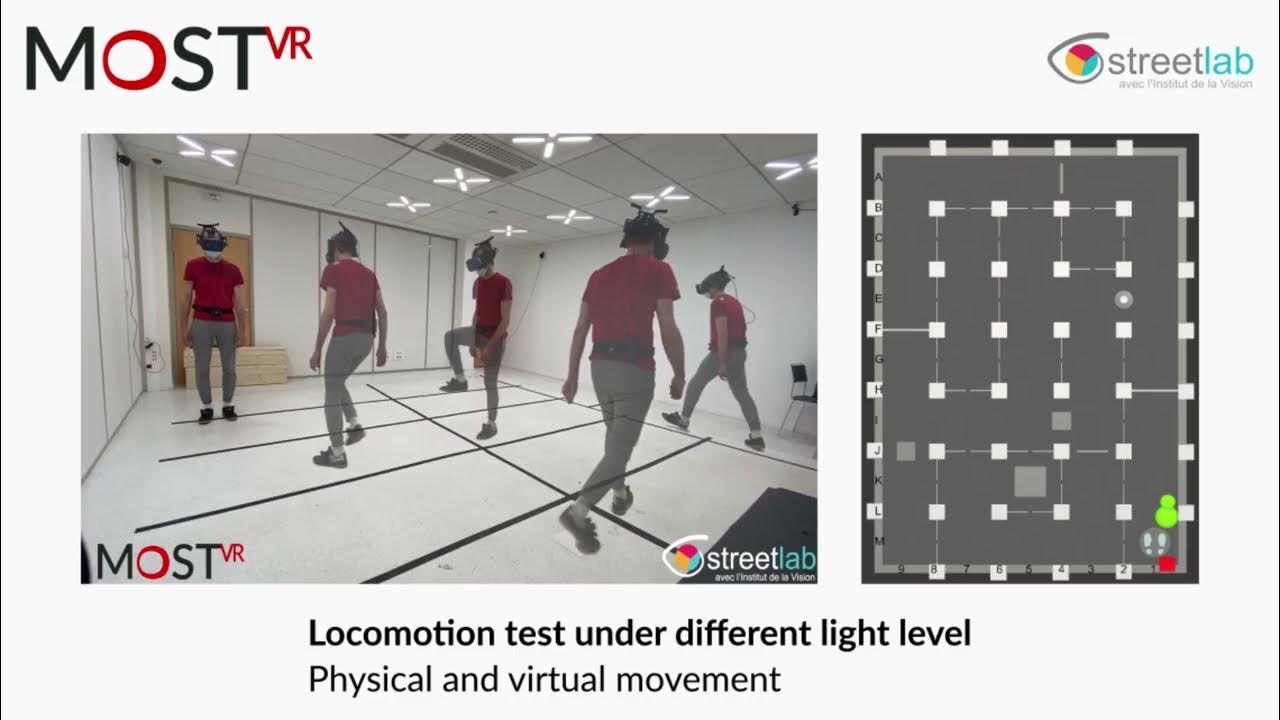
Imagine a sophisticated test environment that accurately simulates real-world mobility challenges while maintaining absolute control over every experimental variable. That's the essence of MOST-VR. This innovative tool leverages the immersive power of virtual reality to create a standardized, yet highly realistic, mobility task. The core objective is clear: to provide a valid and sensitive measurement of functional vision that mirrors the actual mobility difficulties patients encounter in their everyday lives. Unlike conventional tests that might struggle with "learning effects," MOST-VR is designed to effectively reduce such biases, ensuring that the scores genuinely reflect changes in visual function, not just patient familiarity with the test.
The rigorous development and validation process undertaken by Streetlab further solidify MOST-VR's credibility. It's not just a fancy new gadget; it's a meticulously validated scientific instrument. Crucially, the performance of participants in both the physical and virtual reality versions of MOST have been shown to be highly correlated (Authié et al., 2024, AJO). This robust validation provides essential confidence in the data generated by the VR platform, confirming its ability to accurately capture mobility performance. This sensitivity and accuracy mean that for clinical trials and treatment evaluations, MOST-VR offers an unparalleled level of insight into the efficacy of interventions.
The Power of Virtual Reality: Why MOST-VR Stands Out
The adoption of Virtual Reality (VR) is not merely a technological flourish; it's a strategic choice that endows MOST-VR with distinct advantages over traditional testing methodologies. The controlled, dynamic nature of VR environments makes it an ideal platform for assessing complex visual functions, especially for conditions as varied as inherited retinal diseases.
Here’s why VR makes MOST-VR a truly revolutionary tool:
- Fine Control Over Experimental Parameters: VR offers unparalleled precision in manipulating visual elements. Factors like luminance (brightness) and contrast can be adjusted with exquisite detail, allowing for tailored assessments that can pinpoint specific visual deficits relevant to a patient's unique condition. This level of control is virtually impossible to achieve in a real-world testing scenario, where environmental variables are constantly fluctuating. For researchers, this means clearer, more precise data points.
- Fast and Safe Evaluations: Conducting mobility tests in the real world can be time-consuming, resource-intensive, and, for individuals with severe visual impairment, potentially unsafe. MOST-VR eliminates these concerns. Patients can navigate virtual environments safely and efficiently, reducing the risk of falls or disorientation, and significantly speeding up the assessment process. This is particularly valuable in multi-center clinical trials where patient throughput and safety are paramount.
- Suitability for Various Conditions: The adaptability of VR allows MOST-VR to be configured for a wide spectrum of visual impairments. Whether a patient experiences central vision loss, peripheral field defects, or specific issues with light sensitivity, the virtual environment can be customized to challenge and evaluate these specific aspects of functional vision, providing a comprehensive profile.
- Guaranteed Reproducibility Across Different Centers: One of the biggest headaches in multi-site clinical trials is ensuring consistency. Variations in lighting, room layouts, and even test administrator instructions can introduce noise into data. VR inherently solves this. A virtual environment is identical in every location, ensuring that the test conditions are perfectly replicated, regardless of where the assessment is performed. This guarantees robust and comparable data sets across different research sites globally, which is critical for the scientific validity and regulatory acceptance of clinical trial outcomes. For a deeper dive into the validation process, read about the Validated VR Mobility Test for Inherited Retinal Diseases by Streetlab.
These VR advantages translate into more accurate diagnoses, more reliable measurement of treatment effects, and ultimately, faster progress towards effective therapies for inherited retinal diseases.
Streamlined Implementation and Global Reach: MOST-VR Services
Streetlab understands that even the most advanced technology needs to be practical and accessible to make a real-world impact. This commitment to usability is evident in the comprehensive services provided for MOST-VR, ensuring its seamless integration into clinical and research settings worldwide. MOST-VR is truly a globally-ready VR solution, designed for widespread adoption and efficiency.
The implementation process for MOST-VR is remarkably streamlined, condensing setup, validation, and training into just two days:
- MOST-VR Installation: Streetlab takes the logistical burden off the sites. All required materials, including the specialized VR system with motion capture technology and a dedicated computer table controlling the VR headset, are shipped directly to the site. Highly skilled Streetlab technicians then arrive to professionally mount and configure the entire VR system, typically completing the installation within a single day.
- Site Training & Certification: Following installation, Streetlab technicians conduct an intensive one-day practicum. This hands-on training thoroughly explains how to operate the mobility test, manage the VR system, and efficiently process patients. Crucially, site technicians must demonstrate proficiency in performing the test before they are officially certified and authorized to conduct assessments independently. This standardized training ensures consistency and data integrity across all operating sites.
- Automatic Scoring & Reading Center: One of the most user-friendly features of MOST-VR is its automated assessment and quality control. The system automatically computes the performance score, significantly reducing human error and saving valuable staff time. To maintain the highest standards of data quality, these automated scores are then cross-checked by Streetlab’s dedicated reading center, providing an additional layer of verification and ensuring the reliability of every assessment. The user interface, available in English, French, and Italian, further facilitates widespread adoption and ease of use for diverse global teams. This efficient support structure significantly accelerates clinical research and enhances the global reach of advanced diagnostic capabilities. To learn more about how Streetlab's research is improving lives, explore Improving Quality of Life: Streetlab's Vision Research with MOST-VR.
The Future of Functional Vision Assessment
Streetlab's MOST-VR represents more than just a technological upgrade; it's a paradigm shift in how inherited retinal diseases are understood, assessed, and ultimately treated. By providing a valid, sensitive, reproducible, and user-friendly tool, Streetlab is empowering researchers and clinicians with the data they need to make informed decisions, accelerate therapeutic development, and bring meaningful improvements to patients' lives. As medical science continues its rapid advancements, innovative solutions like MOST-VR will be instrumental in translating complex research into tangible benefits, ensuring that a clear vision for quality of life remains at the heart of every discovery. The future of functional vision assessment is here, and it's powered by Streetlab and the immersive potential of virtual reality.